Stephen Edwards, 28 October 2026
I'll be honest, I don't really watch the news most of the time. The Budget is the exception. So here's what the Autumn Budget 2026 actually means for business owners like you, in plain English.
The headline for limited company directors
If you pay yourself through a limited company, this one wasn't a big shock. There's no change to the tax on dividends, and no change to the tax on salary. If you want to check your own mix, our guide to salary vs dividends in 2026 is a good place to start, and if you'd like a hand with the rest, here's how we work as limited company accountants.
But there are a few bits worth knowing about.
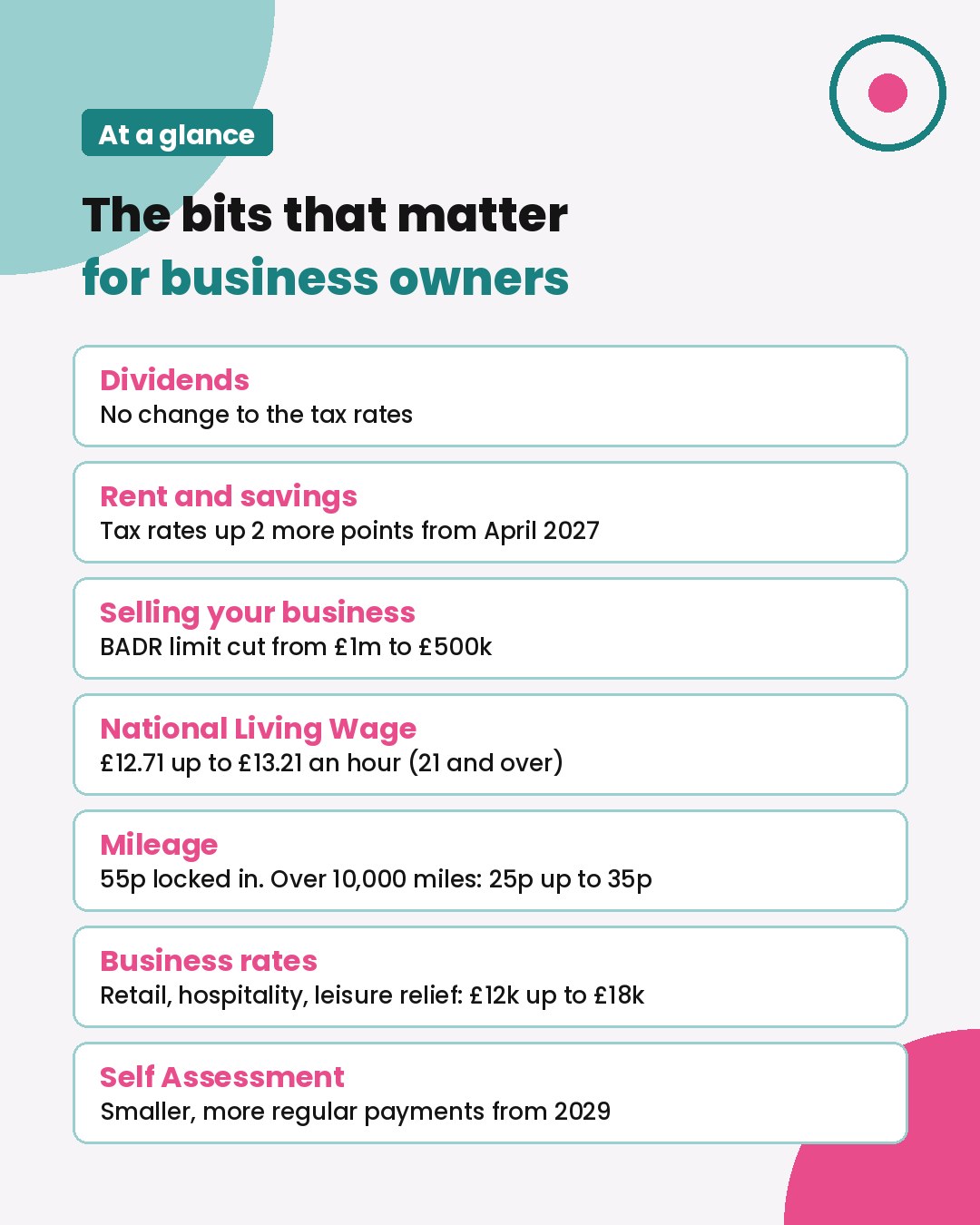
What changed in the Autumn Budget 2026
Tax on rental and savings income from April 2027
If you've got rental property or money sat in savings, the tax rates on that income go up by a further two percentage points from April 2027, on top of the rise that was already announced. If you're a landlord, see how we help landlords.
Business Asset Disposal Relief cut to £500,000
Business Asset Disposal Relief is the relief that gives you a lower rate of Capital Gains Tax when you sell your business. The limit it covers is being cut from £1m to £500,000.
There's also a new founders' relief, with a 10% rate on gains up to £10m, but it's aimed at what the Chancellor called "our most successful firms".
National Living Wage and minimum wage
The National Living Wage for anyone 21 and over goes up from £12.71 to £13.21 an hour. For 18 to 20 year olds it goes from £10.85 to £11.27.
Mileage rates
The Chancellor is proposing to lock in the 55p a mile rate for the first 10,000 business miles, and to raise the rate above 10,000 miles from 25p to 35p.
Small business rates relief
If you're in retail, hospitality or leisure, the threshold for small business rate relief goes up from £12,000 to £18,000.
Self Assessment payments from 2029
From 2029, Self Assessment is moving towards smaller, more regular payments instead of big bills twice a year. HMRC is also getting stronger powers to collect overdue tax.
One line directors should watch
There was one line that caught my eye. The government wants to change the "outdated rules" so people taking profits out of their companies are "taxed consistently". There's no detail yet, but if you're a director, that's one to watch, and we'll be keeping a close eye on it.
What you might want to do now
- If you've got rental income or savings, have a think about whether anything should be done before April 2027.
- If selling your business is on the horizon, it's worth looking at what the lower limit means for you sooner rather than later.
- If you've got a team, put the new wage rates into your numbers now so there are no surprises.
- If you drive for work, make sure you're claiming your mileage properly.
Final thought
Budgets tend to make a lot of noise. Most of what was announced you can't control. What you can control is how ready you are for it.
Want to learn more?
If the Budget might affect your circumstances, or have a big impact on your taxes, it could be worth a closer look. The same goes if you haven't had a deep dive tax review for a while. I don't mean the normal annual review when your accounts are filed. I mean a proper look at your long term goals and your family situation.
So, are you making the most of the 33 ways to save tax?
Autumn Budget 2026 FAQs
Did the Autumn Budget 2026 change dividend tax?
No. There's no change to the tax on dividends, and no change to the tax on salary.
What is the new Business Asset Disposal Relief limit?
The limit is being cut from £1m to £500,000.
What is the new National Living Wage?
It's going up to £13.21 an hour for anyone 21 and over, up from £12.71. For 18 to 20 year olds it goes from £10.85 to £11.27.
What is the new small business rates relief threshold?
For retail, hospitality and leisure businesses it goes up from £12,000 to £18,000.
When do the Self Assessment payment changes start?
From 2029, Self Assessment is moving towards smaller, more regular payments instead of big bills twice a year.
This is a general summary of the Budget announcements, not personal advice. Source: AccountingWEB, "Healey's debut Budget brings a medley of tax changes".